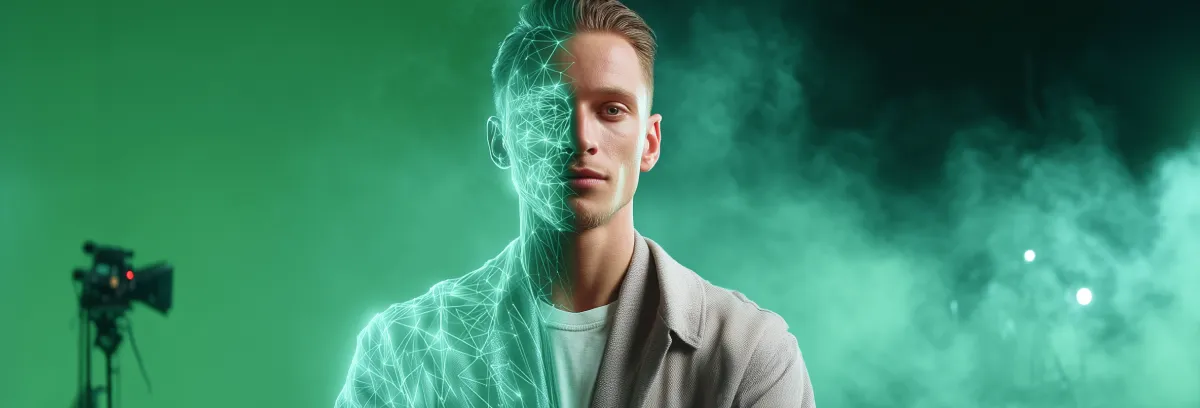
What are films that use AI?
AI-enhanced movies use AI to help with tasks like making visual effects, backgrounds, digital extras, or voice processing. These technologies help filmmakers make complicated scenes more quickly and often for less money.
But AI is usually used as a tool instead of replacing actors.
Some common AI-assisted methods are:
-
AI tools used to make digital environments
-
Clean up or improve voice
-
Editing with AI help
-
Simulations of crowds in the background
These technologies make things more efficient, but they still depend on how well people do their jobs.

Why we still need human actors
Emotional honesty is important for telling stories. People relate to characters because of small things they do that AI systems can't easily copy.
Actors give:
-
Subtlety of emotion
-
Real responses
-
Rhythms of natural conversation
-
People are hard to predict
For example, pausing for a moment before saying a line can show weakness or doubt in ways that scripted digital performances often have trouble copying.
Authenticity is still one of the most important skills that actors bring to a project.
How actors work with AI tools on set
AI technologies are more and more working with actors instead of replacing them. In a lot of productions, actors do their scenes normally, and digital tools make the final product better.
Some examples of working together are:
-
Actors acting out scenes that are later expanded with digital settings
-
Performances that use motion capture to bring digital characters to life
-
Voice actors adding emotional depth to AI-assisted characters
Specific detail: When actors do motion capture performances, they have to show emotion and physical behaviour even when they are wearing performance suits and working with small sets.
The technology makes things work better, but it still needs people to use it.
You might also be interested in:
What kinds of roles still need people to play them?
AI tools are getting better, but there are still many jobs that need people to do them.
Human actors are still very important for:
-
Characters who lead and support
-
Scenes with a lot of talking
-
Times when the story made you feel something
-
Stunts and physical performance
-
Dialogue that is made up on the spot
Specific observation: AI systems have a hard time realistically simulating the subtle reactions and emotional timing that are needed for complex character relationships.
People who act are still the most important part of telling stories.
How motion capture expanded opportunities for actors
Motion capture technology has opened up new acting roles in movies, TV shows, and video games. Actors do movements and facial expressions that are then used on digital characters.
These jobs need a lot of physical control and creativity.
Acting with motion capture includes:
-
Putting on special performance suits
-
Acting in very small, controlled spaces
-
Using technology to capture faces
-
Showing emotion through voice and movement
A lot of big fantasy and science fiction films use motion capture performances a lot.
This part of casting keeps getting bigger as AI-assisted production gets better.
Why audiences still prefer human performances
People can tell right away when a performance feels fake. Even when the special effects are great, a story's emotional truth is what makes it work.
People who act give:
-
Timing that feels natural in conversations
-
Real emotional reactions
-
Behaviour that isn't perfect but is believable
For example, a small change in tone or facial expression during a dramatic scene can change how people see a character in a big way.
It is still hard for AI-generated performances to convincingly copy these small things that people do.
How actors can adjust to productions that use AI
Actors who know about new technologies can get ready for new chances. AI-enhanced productions often need actors who are familiar with digital production methods.
Skills that are useful are:
-
Performance with motion capture
-
Acting with your voice
-
Acting on a green screen
-
Being able to change in technical environments
Actors who are trained in these areas can work well with production teams using advanced tools.
Instead of getting rid of acting, technology makes it bigger.

Where actors can find work in new productions
Casting opportunities keep growing as production methods change. AI tools are becoming more common in the work of streaming services, game studios, and movie studios.
Allcasting.com and other casting sites regularly post jobs for actors, voice actors, and motion capture roles in a variety of projects. Actors can connect with productions that are looking into new ways to tell stories by making a professional profile and sending in applications on a regular basis.
Keeping your headshots, reels, and performance clips up to date makes it easier for people to find you when they search for actors online.
Actors who keep up with changes in the industry are often better at adapting.
Last thoughts
AI-enhanced filmmaking is changing some parts of the entertainment industry, but human actors are still important to telling stories. Technology can't fully replace emotional authenticity, improvisation, and being there in person.
Actors who know how to use digital tools like motion capture and AI-assisted production will probably find new jobs in the changing film industry.
AI is not replacing actors; instead, it is becoming another tool for telling stories in new ways. The heart of every great performance is still human creativity and emotion.