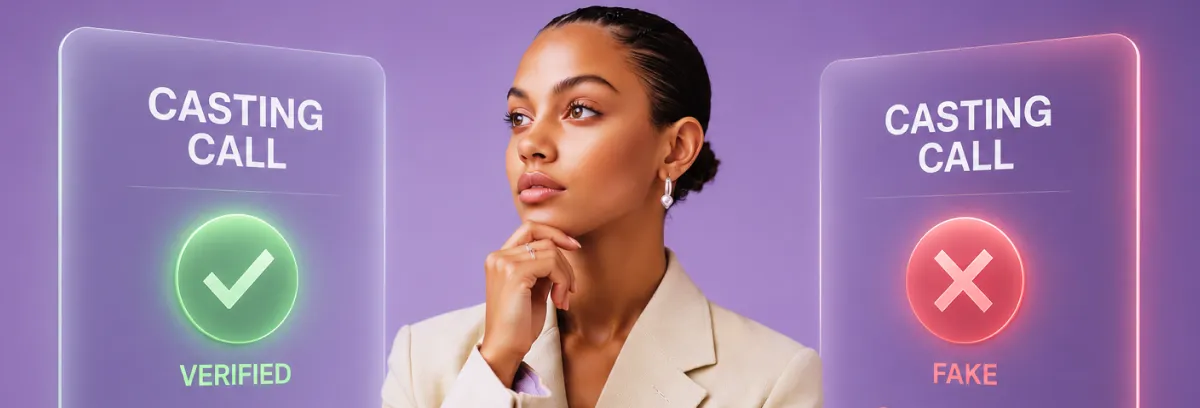
Why casting scams still happen in 2026
Casting scams keep happening because a lot of people want to get into the entertainment business. Scammers take advantage of that excitement by offering chances that seem real but are really just ways to get money or personal information.
In the last few years, online casting has grown a lot. Actors can find roles more easily with self-tapes, remote auditions, and social media casting calls. However, these same tools also make it easier for scammers to pretend to be real casting processes.
Specific observation: Many fake listings look like real casting calls, which makes them hard to spot right away.
The best way to protect yourself is to know the common warning signs.

What fake casting calls usually look like
Most casting scams follow a set pattern. They often say that you can get a lot of money, don't need much experience, and will make quick decisions about bookings.
Some things that are common are:
-
Very high pay for easy work
-
Very few or no details about the production
-
No name of the company or credits that can be verified
-
Requests to talk through private messaging apps
For example, a message that says "No experience needed for a $2,000 one-hour commercial shoot" without saying what the brand or production company is should raise red flags.
Legitimate productions give clear information because casting professionals need accurate submissions.
You might also be interested in:
Why upfront fees are a big warning sign
Actors don't have to pay for auditions when they work with a professional casting company. It is likely a scam if a listing asks for "audition processing costs," "application fees," or "registration fees."
Scammers often hide these fees as:
-
Fees for reviewing portfolios
-
Requirements for membership
-
Auditions for the workshop
-
"Guaranteed chances to be cast"
Reality check: Some real acting schools charge for training, but they don't promise you a role in a professional production.
If you have to pay before an audition or booking, be careful.
How scammers use urgency to get actors to act
Scammers often make people feel like they need to act quickly to get what they want. This method stops actors from looking into the chance or checking the source.
Here are some warning phrases:
-
"We need to confirm talent today."
-
"Limited slots—pay now."
-
"The first 20 applicants are guaranteed to be chosen."
Casting calls for professionals don't usually work this way. Legitimate productions usually give people time to submit their work, get callbacks, and review it.
If you feel like you have to do something right away, it's a good idea to stop and look into it more.
What actors should never share about themselves early on
When you send in your information for a casting call, you need to keep it safe. Some scammers try to get personal information that can be used to steal someone's identity.
Don't share:
-
Numbers for social security
-
Information about your bank account
-
Scans of passports
-
Addresses of homes during early auditions
Only real productions ask for sensitive documents after the contracts are signed and the payroll process starts.
Specific detail: After you officially book, payment forms and tax paperwork are usually taken care of.
How to check if a casting call is real
One of the easiest ways to avoid scams is to do your homework. It only takes a few minutes to check a project, but it can save a lot of trouble.
How to check if something is real:
-
Look up the production company on the internet* Check for a professional website or social media account
-
Use industry databases to check on casting directors* Check to see if the project is listed on well-known casting sites
If you can't find any information about the company or project, be careful about the chance.
Most professional productions leave behind digital footprints.

Why it's important to use trusted casting platforms
Using well-known casting platforms (like allcasting.com, wink wink) greatly lowers the chance of falling for a scam. These platforms often check project listings and make sure that casting calls follow the rules.
Actors and models can find a lot of real work on allcasting.com, such as commercials, streaming ads, independent films, and modelling projects. You can easily make a professional profile, upload headshots, and apply directly to casting calls on the site.
Some benefits of using trusted platforms are:
-
Verified project listings
-
Clear descriptions of roles
-
Clear information about pay
-
Well-organised ways to submit
This structure helps actors avoid the uncertainty that comes with random casting posts on social media.
What to do if you encounter a casting scam
If you think a casting call is fake, stop talking to them and don't give them any more information. Letting people know about suspicious listings helps keep other actors safe.
Some things you should do are:
-
Take a screenshot of the listing or messages
-
Tell the platform about the account or listing
-
Tell the right casting groups about it* Don't talk to the sender anymore
Most trustworthy casting websites also let you report posts that seem suspicious.
Final thoughts
There are still casting scams in the entertainment business, but actors can protect themselves by knowing what to look for and checking out opportunities. Scammers often ask for payment up front, give vague project details, and push you to act quickly.
Actors can avoid fake listings and find real casting calls by focusing on trustworthy sites like allcasting.com and taking the time to research each opportunity. Keeping your personal information safe and being careful will help you avoid making expensive mistakes in the early stages of your career.